
STSU most commonly stands for “Shut The S* Up.”** It is a slang abbreviation used in texts, group chats, and social media comments. Depending on tone, it can be a rude command, a joking reaction to shocking news, or friendly teasing between close friends.
Because the meaning depends so heavily on context, a wrong reading can cause real misunderstandings. This guide explains what STSU means, where people use it, how to reply, and what to say instead when you want to stay polite.
What Does STSU Mean in Text?
STSU is a texting abbreviation for “Shut The S*** Up.” It works like STFU, but many people treat it as a slightly softer, more casual cousin.
Quick definition:
| Term | Full Form | Core Meaning |
| STSU | Shut The S*** Up | Be quiet, or “no way!” |
| STFU | Shut The F*** Up | Stronger version of the same phrase |
| STHU | Shut The Hell Up | Milder version |
The literal meaning is a command to stop talking. In real chats, though, people often use it to react with surprise, disbelief, or humor.
STSU Meaning in Chat Conversations
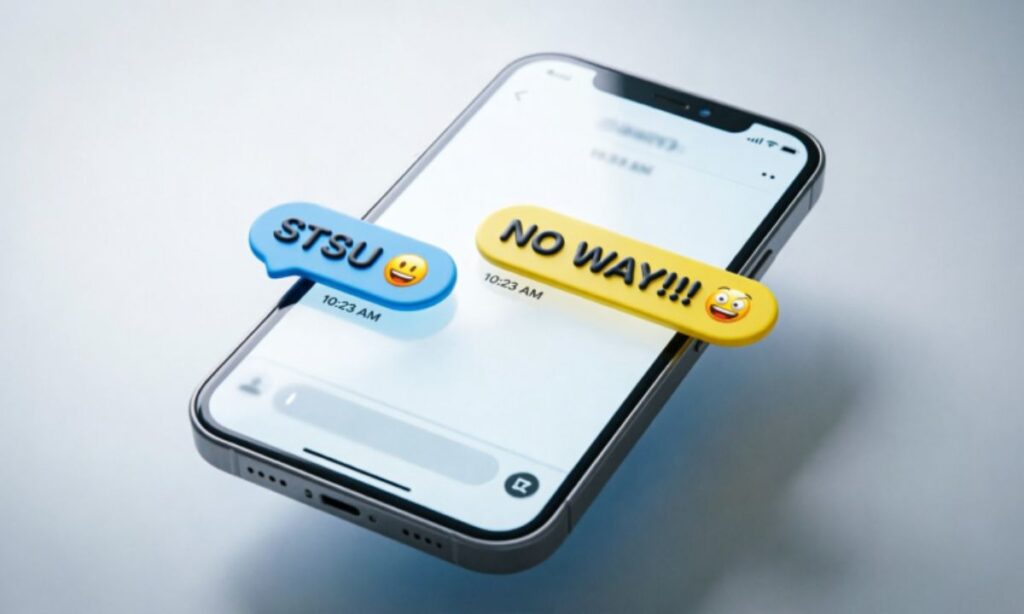
In chat conversations, STSU shows up in three main ways:
- As an insult: Telling someone to stop talking, usually during an argument.
- As a joke: Friendly teasing between people who know each other well.
- As a reaction: Expressing shock, like “Stop it, that’s unreal!”
Here is how each looks in a message thread:
- Angry: “STSU, I’m done listening to this.”
- Playful: “You got front row tickets?? STSU!”
- Teasing: “STSU, you’re literally the worst at keeping secrets 😂”
The words are identical. The tone is what changes everything.
STSU Meaning on Social Media Platforms
STSU appears on every major app, but the vibe shifts slightly by platform.
| Platform | Typical Use |
| Snapchat | Quick reactions to a friend’s snap or story |
| DM banter or comments under memes | |
| TikTok | Comment section reactions to wild videos |
| Group chat jokes and heated replies |
STSU meaning on Instagram: Mostly a playful reaction in DMs. Some Instagram users also use STSU to mean “Send This To Someone,” usually in a caption asking followers to share a post with a friend. If the post is a meme and not a conversation, this second meaning is likely.
STSU meaning on TikTok: Usually an excited or shocked comment, like “STSU, this is so good.”
Why People Use STSU in Texting
People use STSU for a few practical reasons:
- Speed. Four letters are faster than a full sentence.
- Emphasis. It adds punch to a reaction.
- Group identity. Shared slang makes friend groups feel closer.
- Softer profanity. It lets people swear without typing the full words.
- Emotional shortcut. One abbreviation can show excitement, frustration, or humor.
It is common among teenagers and young adults, and it spreads quickly through messaging apps and short video platforms.
Understanding STSU Based on Context
Meaning depends on context. Before reacting, check these signals:
- Who sent it? A close friend or a stranger?
- What came before it? Good news, gossip, or an argument?
- What is the tone? Exclamation marks and laughing emojis usually signal fun.
- Are there emojis? 😂 and 😭 point to playful. 😡 points to anger.
- What is the relationship? Teasing works among friends, rarely among acquaintances.
If you are unsure, look at the sender’s earlier messages. The sender’s intention is usually clear from the pattern.
Real-Life Usage Examples
Example 1: Playful disbelief
Maya: I got the internship at Spotify!
Zoe: STSU!! Congrats 😭🎉
Example 2: Friendly teasing
Ali: I actually cooked dinner without burning it.
Sam: STSU, I don’t believe you 😂
Example 3: Frustration in an argument
Chris: You always do this.
Dana: STSU, I’m tired of this conversation.
Example 4: Group chat reaction
Priya: Plot twist, he’s moving to Dubai.
Group: STSU 😳
When to Use STSU
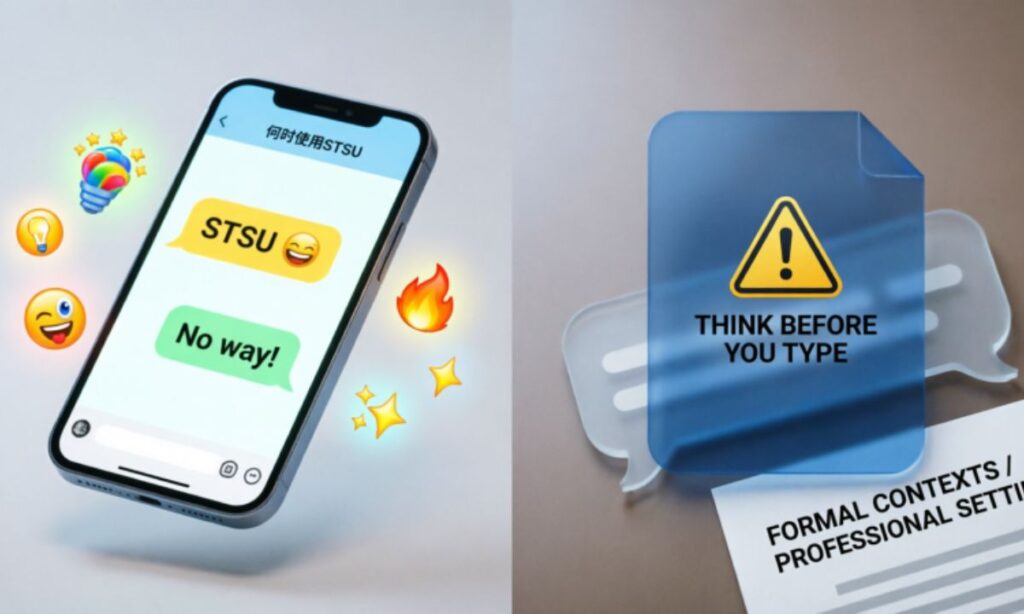
STSU works best when the relationship and tone are both clear. Good moments include:
- Reacting to good news from a close friend
- Joking around in a casual group chat
- Responding to a funny or unbelievable story
- Matching a friend’s playful energy
Use it only with people who share your sense of humor and understand the playful meaning.
When NOT to Use STSU
Skip STSU in these situations:
- Professional messages: Emails, work chats, or client messages
- With teachers, managers, or elders: It reads as disrespectful
- With someone you barely know: Without trust, it sounds rude
- During serious conversations: It can feel dismissive
- When someone is upset: It may make things worse
A simple rule: if you would not say the phrase out loud to that person, do not text it.
Similar Slang Terms to STSU
Many abbreviations carry a similar meaning:
- STFU: Shut The F*** Up (stronger)
- STHU: Shut The Hell Up (milder)
- SMH: Shaking My Head
- OMG: Oh My God
- FR: For Real
- NGL: Not Gonna Lie
- IKR: I Know, Right?
- No cap: No lie
Terms like OMG and FR share the “expressing surprise” function of playful STSU, without the harsh edge.
Why STSU Is Trending
STSU is spreading for a few clear reasons:
- Short video platforms reward quick, emotional reactions.
- Group chats favor short, expressive slang.
- Younger users want milder-sounding alternatives to STFU.
- Reaction-based humor keeps this type of phrase popular.
Like most internet vocabulary, its popularity may rise and fall. Slang is always changing.
Tone Matters: How STSU Can Change Meaning
The same four letters can mean very different things. Tone shows up through punctuation, capitalization, and emoji interpretation.
| Message | Likely Tone |
| “stsu 😂😂” | Playful |
| “STSU!!!” | Excited or shocked |
| “stsu.” | Cold or annoyed |
| “STSU 😡” | Angry |
| “stsu you’re so funny” | Friendly teasing |
A period at the end often makes a message feel harsher. Multiple exclamation marks usually signal excitement.
Psychological Impact of Using STSU
Words in text carry no voice or facial expression, so readers fill in the tone themselves. That is where problems begin.
- On the receiver: A joking STSU can feel hurtful if they are already stressed or insecure.
- On the relationship: Repeated use during disagreements can create distance.
- On the sender: It can escalate emotions instead of calming them.
Teasing builds bonds only when both people feel safe. If someone reacts badly, pause and clarify.
Is STSU Always Offensive?
No. STSU is not always offensive, but it is never fully neutral.
- Not offensive: Between close friends who use it as a joking reaction.
- Mildly rude: Said casually to someone you do not know well.
- Clearly offensive: Used in anger or to silence someone.
Since it contains a swear word, treat it as informal and potentially rude unless you are certain of the tone.
How to Respond to STSU in a Conversation
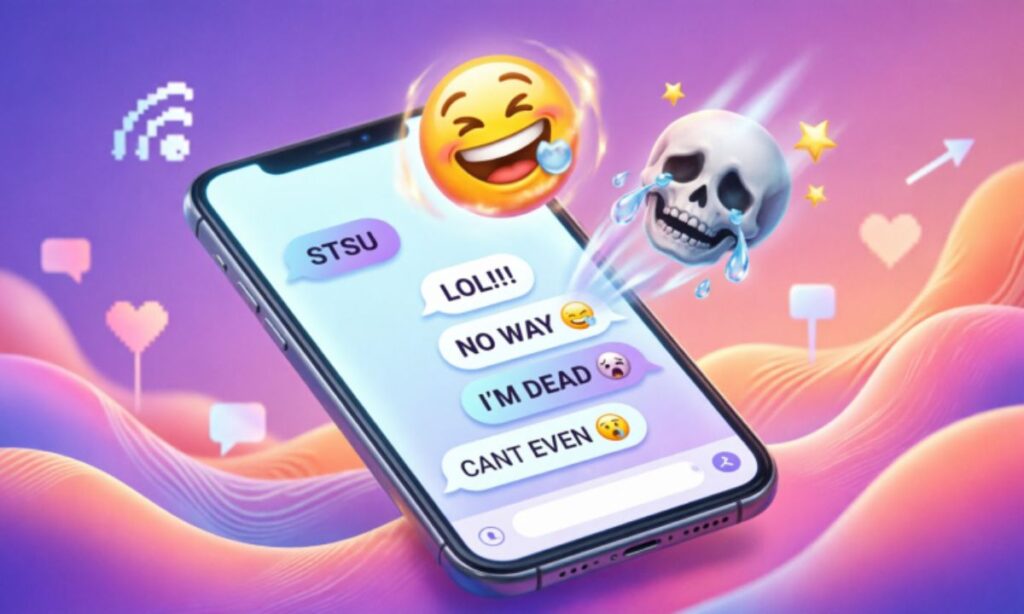
Your reply depends on how the message was meant.
If it was playful:
- “I know, right? 😂”
- “Swear it’s true!”
- “Wait until you hear the rest.”
If it felt rude:
- “That felt a bit harsh. Can we talk calmly?”
- “I’m not trying to upset you.”
If you are unsure:
- “Was that a joke or are you annoyed?”
Steps to respond:
- Read the message again in context.
- Check the sender’s usual tone.
- Reply in kind if it was playful.
- Ask for clarity if it feels unclear.
- Set a boundary if it was disrespectful.
STSU vs Other Strong Slang Terms
| Term | Strength | Common Use |
| STSU | Medium to strong | Playful or angry |
| STFU | Strong | Anger or heavy teasing |
| STHU | Medium | Annoyance or humor |
| Shush | Mild | Gentle, light-hearted |
| Be quiet | Mild | Neutral request |
STSU vs STFU: The difference is the swear word. STFU uses a stronger word, so it hits harder. STSU feels slightly less aggressive to many users, but both are impolite in the wrong setting.
How STSU Reflects Modern Communication Trends
STSU shows how digital communication keeps evolving:
- Shortened phrases save time on messaging apps.
- Slang expressions build a sense of belonging.
- Emotion-first language replaces long explanations.
- Softened profanity lets users swear without full words.
- Context-dependent meaning makes interpretation a skill.
Online communication relies on shared understanding. People who grow up texting learn these cues quickly. Others may misread them.
Tips for Using STSU Safely in Texting
- Know your audience. Use it only with close friends.
- Add a clear tone signal. Emojis or exclamation marks help.
- Avoid it in conflicts. It can escalate arguments.
- Never use it at work. Keep professional chats polished.
- Watch the reaction. If the other person goes quiet, check in.
- Apologize quickly. If it landed badly, say so.
Common Mistakes When Using STSU
- Sending it to someone you just met
- Using it in a serious or emotional conversation
- Assuming everyone reads it as a joke
- Typing it in all caps during a disagreement
- Using it in professional or school settings
- Ignoring the other person’s reaction
- Mixing it up with similar slang that means something else
Does STSU Have Other Meanings?
Yes, but they are less common. Meaning depends on where you see it.
| Possible Meaning | Context |
| Shut The S* Up** | Texts, chats (most common) |
| Send This To Someone | Instagram captions, meme posts |
You may also run into websites that list other expansions. Many of these low-quality pages contradict each other, so treat them with caution. If a conversation looks like a quick emotional reaction, “Shut The S*** Up” is almost always the right reading.
Is STSU Used Worldwide?
STSU is mainly used by English speakers on global apps like Snapchat, Instagram, TikTok, and WhatsApp. It is most familiar in the United States, the UK, Canada, and Australia. In other regions, people may recognize it from online content but use local slang instead.
How STSU Compares to Polite Alternatives
When you want the same energy without the edge, try these:
| Instead of STSU | Try This |
| “STSU, no way!” | “No way!” |
| “STSU, that’s insane” | “That’s wild!” |
| “STSU” (to stop talking) | “Can we pause for a moment?” |
| “STSU” (annoyed) | “I need a minute.” |
| “STSU” (teasing) | “Stop it, you’re too much 😂” |
Other polite alternatives:
- “Are you serious?”
- “I can’t believe it.”
- “Please give me a minute.”
- “Let’s talk about this later.”
Frequently Asked Questions
What does STSU stand for?
STSU most commonly stands for “Shut The S*** Up.” It can be playful or rude depending on tone.
What does STSU mean in texting?
It means “be quiet” or “I can’t believe it,” depending on how it is used.
Is STSU rude?
It can be. It is fine between close friends but harsh in serious or professional chats.
What does STSU mean on Snapchat?
It is usually a casual reaction to a friend’s snap or story.
What does STSU mean on Instagram?
It is typically a playful DM reaction, though some captions use it for “Send This To Someone.”
What is the difference between STSU and STFU?
Both mean “shut up,” but STFU uses a stronger swear word and sounds harsher.
How do I respond to STSU?
Match the tone. Joke back if it is playful, or ask for clarity if it feels rude.
What does STSU mean from a girl or a guy?
The meaning is the same. Tone and relationship decide whether it is playful or angry.
Conclusion
STSU means “Shut The S*** Up,” and it can be a joke, a reaction, or an insult. Tone, timing, emojis, and the relationship between people decide the meaning.
Use it only with close friends who understand your humor. Avoid it in professional messages, serious talks, and arguments. When you receive it and feel unsure, ask for clarity instead of guessing.
Understanding STSU helps you read modern chats more accurately and choose better words when it matters.