Long term. Long-term. Longterm. They look almost the same. But only some of them are correct.
If you’ve ever paused mid-sentence, unsure whether to add a hyphen or squish the words together, you’re not alone. This exact question — long term or longterm — trips up students, professionals, and even seasoned writers. The good news? The rule is simpler than it looks, and once you learn it, you’ll never second-guess yourself again.
This guide breaks down long term or longterm in plain English. You’ll see the quick answer first, then the grammar behind it, real-world examples, common mistakes, and a fifteen-question quiz to lock it all in. No jargon. No fluff. Just a clear answer to a question that deserves one.
What Is the Correct Spelling: Long Term or Longterm?
Quick Answer
Here’s the short version. “Long term” (two words, no hyphen) is correct when it works as a noun phrase. “Long-term” (hyphenated) is correct when it works as an adjective before a noun. “Longterm” (one word) is not standard English in any context.
So when people ask long term or longterm, the honest answer is: it depends on the sentence, but it’s never longterm.
- Long term — a noun phrase (“over the long term”)
- Long-term — a compound adjective (“a long-term plan”)
- Longterm — not a recognized spelling
Why the Confusion Exists
English hyphenation rules feel inconsistent, and they kind of are. Compound words evolve over time — “e-mail” became “email,” and “on-line” became “online.” Writers naturally wonder if long term or longterm is following the same path.
It isn’t, at least not yet. Major dictionaries and style guides still treat “long term” and “long-term” as the standard forms, depending on grammatical role. “Longterm” hasn’t earned that status.
Dictionary Consensus
Merriam-Webster and Cambridge Dictionary both list “long-term” as a hyphenated adjective and “long term” as an open noun phrase. Neither dictionary recognizes “longterm” as a standalone entry. That consensus matters because dictionaries track how a word is actually used by professional writers and editors, not just how it appears in casual online writing. So the long term or longterm debate has a clear answer at the dictionary level, even if everyday usage online is messier.
Understanding the Difference Between Long Term and Long-Term
Long Term as a Noun Phrase
When “long term” stands on its own — not describing a noun directly in front of it — leave it open, with a space and no hyphen.
Examples:
- “We’re investing for the long term.”
- “Over the long term, the strategy paid off.”
In both cases, “long term” acts like a phrase meaning “an extended period,” not a description of a specific noun.
Long-Term as a Compound Adjective
When the phrase sits directly before a noun and describes it, add the hyphen.
Examples:
- “This is a long-term investment.”
- “They built a long-term relationship.”
Here, “long-term” modifies “investment” and “relationship.” That’s the compound-adjective rule at work, and it’s the core of the long term or longterm question.
Easy Rule to Remember
Ask yourself: is this phrase sitting right before a noun, describing it? If yes, hyphenate. If it’s standing alone, leave it open. This single test resolves most long term or longterm confusion instantly.
Why Longterm Is Usually Incorrect
The Internet Does Not Always Follow Grammar Rules
Social media captions, casual comments, and quick emails often merge words for speed. “Longterm” shows up in these spaces because typing one word feels faster than adding a hyphen or a space. But casual usage doesn’t equal correctness. When it comes to long term or longterm, informal habits online haven’t changed the formal rule.
Professional Writing Standards
Academic papers, business documents, and professional communication follow editorial style guides that reject “longterm” as nonstandard. If you’re writing a report, an email to a client, or a school assignment, sticking to “long term” or “long-term” protects your credibility. Getting long term or longterm wrong in formal writing can make otherwise strong content look sloppy.
When Might You See Longterm?
You may still spot “longterm” in brand names, informal blog posts, or user-generated content like forum posts and social captions. That doesn’t make it standard English — it just reflects how casual, unedited writing sometimes bends the rules. For anything formal, avoid it.
Long Term vs Long-Term: Real Examples
Example 1: Business Writing
“Our long-term goal is to expand into three new markets.” Here, “long-term” describes “goal,” so it takes the hyphen.
Example 2: Investment Discussion
“She prefers to think about her portfolio in the long term.” No noun follows directly, so it stays open.
Example 3: Education
“The school introduced a long-term tutoring program for struggling students.” Adjective before a noun — hyphenated.
Example 4: Healthcare
“Patients with chronic conditions often need long-term care.” Same pattern: compound adjective, hyphen included.
A Simple Step-by-Step Method to Choose the Correct Form
Step 1: Find the Phrase
Locate “long term” in your sentence and look at the words around it.
Step 2: Check What Comes Next
Is there a noun immediately after it? If so, the phrase is likely functioning as an adjective.
Step 3: Use a Hyphen If Needed
If a noun follows directly, hyphenate: “long-term plan,” “long-term investment,” “long-term strategy.”
Step 4: Leave It Open If It Stands Alone
If the phrase isn’t directly modifying a noun, keep it as two separate words with no hyphen.
Step 5: Avoid Longterm
Whatever you decide between the two correct forms, cross “longterm” off your list. It’s not part of standard English spelling, so when weighing long term or longterm, longterm should never win.
Case Study: How a Small Business Improved Its Professional Writing
A small marketing agency noticed inconsistent spelling across its website, proposals, and client emails — sometimes “long term,” sometimes “longterm.” A new editor introduced a simple internal style rule based on the noun-versus-adjective test above.
Within a few weeks, writers stopped second-guessing themselves. Proposals looked more polished, and a client even commented that the copy felt “sharper and more professional.” The fix wasn’t complicated. It was just consistency, built from understanding long term or longterm once and applying it every time.
Also, read this : Cocoon or Cacoon
Grammar Trends and Language Data in 2025–2026
Growth of Compound Words
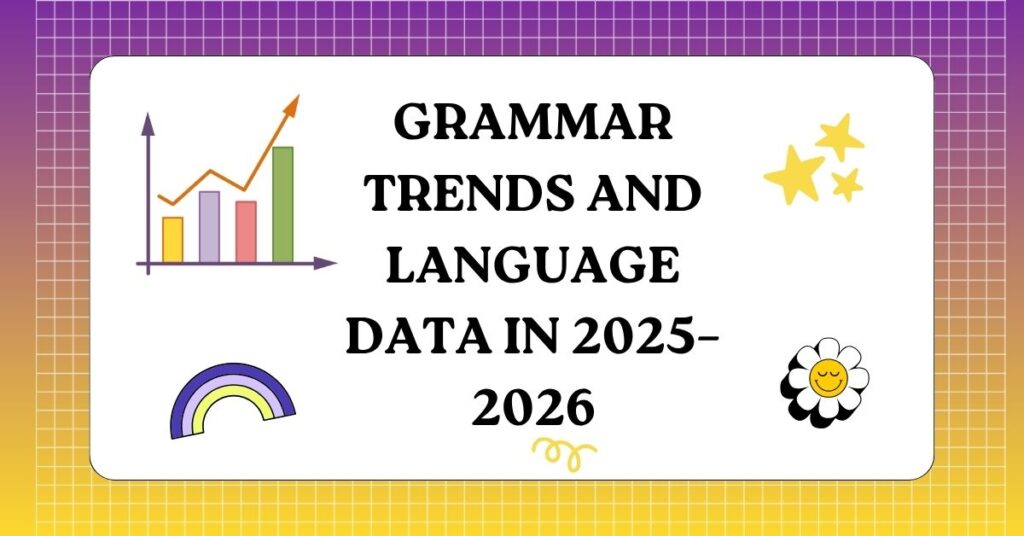
English does merge words over time. But this typically happens gradually, through repeated, widespread use across formal and informal writing, and eventually gets confirmed by dictionaries.
What Current Usage Shows
As of 2026, “long-term” and “long term” remain dominant in professional, academic, and journalistic writing. “Longterm” appears mostly in casual, unedited text. Language data hasn’t shown a meaningful shift toward merging it into one accepted word.
What This Means for Writers
Don’t get ahead of the dictionaries. Until “longterm” earns formal recognition, if ever, the safe and professional choice in the long term or longterm debate stays the same: use the hyphenated or open form depending on grammatical role.
Common Mistakes Writers Make
Mistake 1: Omitting the Hyphen
Writing “long term investment” instead of “long-term investment” is one of the most frequent slips. The missing hyphen weakens clarity in formal writing.
Mistake 2: Adding an Unnecessary Hyphen
The reverse also happens: “long-term” gets used when the phrase should stand alone, like “we’re planning for the long-term” instead of “the long term.”
Mistake 3: Writing Longterm as One Word
The most common long term or longterm mistake is merging the words entirely, even though no major dictionary supports it.
Mistake 4: Switching Between Forms
Inconsistency within a single document — using all three spellings across different paragraphs — signals a lack of proofreading and hurts credibility.
Mini Quiz: Long Term or Longterm
Test what you’ve learned. Answers follow each question.
Mini Quiz 1: Spot the Correct Form
“We need a (long term / long-term) plan for growth.” — Answer: long-term.
Mini Quiz 2: Add the Hyphen?
“He’s committed to the relationship for the long term.” — Answer: no hyphen needed; correct as is.
Mini Quiz 3: Quick Grammar Check
Is “longterm” ever correct in formal writing? — Answer: no.
Mini Quiz 4: True or False
“Long-term” is always hyphenated, no matter the sentence. — Answer: false; it depends on placement.
Mini Quiz 5: Choose the Winner
“long term investment” vs. “long-term investment” — Answer: long-term investment.
Mini Quiz 6: Fill in the Blank
“Over the ___ term, prices tend to rise.” — Answer: long.
Mini Quiz 7: Hyphen Hero
“long-term care” — correct or incorrect? — Answer: correct.
Mini Quiz 8: Fast Choice
Noun phrase or adjective: “planning for the long term”? — Answer: noun phrase.
Mini Quiz 9: True or False
Dictionaries recognize “longterm” as standard. — Answer: false.
Mini Quiz 10: Find the Correct Sentence
“She has a long term goal” or “She has a long-term goal”? — Answer: long-term goal.
Mini Quiz 11: One Word or Two?
Should “longterm” ever be written as one word? — Answer: no.
Mini Quiz 12: Grammar Challenge
“long-term solution” modifies which word? — Answer: solution.
Mini Quiz 13: Easy Pick
“in the long term” — hyphen or no hyphen? — Answer: no hyphen.
Mini Quiz 14: Quick Knowledge Test
Which form is preferred in professional writing: “long-term” or “longterm”? — Answer: long-term.
Mini Quiz 15: Final Grammar Check
True or false: the rule depends on whether a noun follows directly. — Answer: true.
How Style Guides Treat Long Term or Longterm
Most professional style guides — the ones newsrooms, publishers, and corporate communications teams rely on — treat this exactly like other compound adjectives. The Associated Press style guide and The Chicago Manual of Style both favor hyphenating compound modifiers before a noun, which is why “long-term” gets the hyphen in that position. Neither guide endorses “longterm” as an alternative spelling.
This matters for anyone weighing long term or longterm in a professional context. If your company follows AP style for its blog, or Chicago style for internal reports, the hyphenation rule is already decided for you. Consistency with an established style guide also protects your writing from looking careless, especially when multiple people are contributing to the same document.
Freelancers and content teams often build their own internal style sheets for exactly this reason. Once a team settles the long term or longterm question and writes the rule down, editors stop flagging it in every review, and writers stop guessing.
Long Term or Longterm in Marketing and Branding
Marketing copy sometimes bends grammar rules for stylistic reasons, and this is one area where “longterm” occasionally slips through. A tagline or a product name might use “longterm” as a stylistic choice, similar to how brands sometimes drop spaces or hyphens from names for visual branding.
That’s a deliberate branding decision, not a grammar rule. If you’re naming a product, you can choose “Longterm” as a brand name. But if you’re writing the surrounding marketing copy — website text, ad descriptions, email campaigns — stick to the standard forms. Mixing a stylized brand name with correct grammar in the body text keeps your writing professional while still letting the brand name stand out.
This distinction resolves a lot of confusion. People sometimes see a company name using “Longterm” and assume it validates the one-word spelling everywhere. It doesn’t. The long term or longterm rule for regular writing stays the same regardless of how a brand chooses to style its own name.
Conclusion
The long term or longterm question comes down to one simple test: check what follows the phrase. If a noun comes right after it, hyphenate it as “long-term.” If it stands alone, leave it open as “long term.” Either way, skip “longterm” entirely — it isn’t part of standard English, no matter how often it shows up in casual writing online.
Once you’ve internalized this rule, you’ll spot the correct form almost automatically, whether you’re writing a business proposal, a school essay, or a quick email. The long term or longterm mix-up is common, but it’s also one of the easiest grammar fixes to master permanently. Bookmark this guide if you need a refresher, and share it with anyone who still mixes up long term or longterm. Now you’ll never get it wrong again.